

Ball Screw
Ball Screw Manufacturer & Supplier — Baili Guide Rail
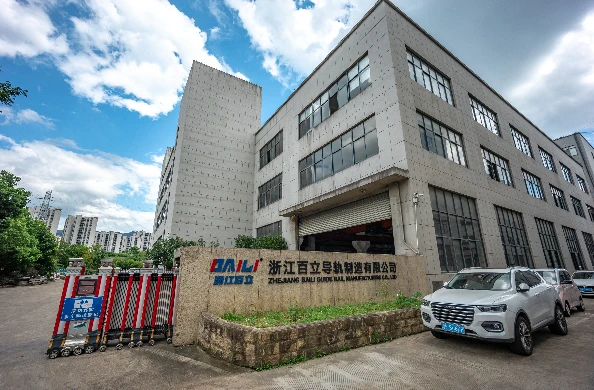
Baili designs and manufactures high-precision ball screws for CNC machine tools, industrial robots, semiconductor equipment, and automation systems. Our SFU and SFE series cover nominal diameters from 12 mm to 80 mm, with leads ranging from 4 mm to 40 mm to suit both high-load and high-speed applications. Every ball screw is produced at our 14,000 m² facility in Shuigai Industrial Park, Lishui, Zhejiang, using Japanese and German CNC grinding machines to achieve ±0.005 mm positioning accuracy. With a monthly capacity of 100,000 sets and a minimum order quantity of just 1 piece, we support rapid prototyping and large-scale production alike.
-
![Ball Screw SFU 1204]() Ball Screw SFU 1204Ball Screw SFU 1204 is a high-precision ball screw manufactured from premium alloy steel, delivering exceptional transmission efficiency and positioning accuracy. Featuring a 12mm diameter with a...read more
Ball Screw SFU 1204Ball Screw SFU 1204 is a high-precision ball screw manufactured from premium alloy steel, delivering exceptional transmission efficiency and positioning accuracy. Featuring a 12mm diameter with a...read more -
![Sfu1204]()
-
![Ball Screw SFE 4040]() Ball Screw SFE 4040The SFE4040 is a ball screw with a nominal diameter of 40 mm and a lead of 40 mm. It belongs to the 1:1 ultra‑large lead specification within the SFE series (lead equals diameter). Its core design...read more
Ball Screw SFE 4040The SFE4040 is a ball screw with a nominal diameter of 40 mm and a lead of 40 mm. It belongs to the 1:1 ultra‑large lead specification within the SFE series (lead equals diameter). Its core design...read more -
![SFE 3232]()
-
![Ball Screw SFE 2525]() Ball Screw SFE 2525The SFE2525 is a ball screw with a nominal diameter of 25 mm and a lead of 25 mm (a 1:1 large-lead specification), specifically designed for high-speed, light-load transmission in compact spaces....read more
Ball Screw SFE 2525The SFE2525 is a ball screw with a nominal diameter of 25 mm and a lead of 25 mm (a 1:1 large-lead specification), specifically designed for high-speed, light-load transmission in compact spaces....read more -
![Ball Screw SFE2020]() Ball Screw SFE2020The SFE2020 is a ball screw with a nominal diameter of 20 mm and a lead of 20 mm. It belongs to the 1:1 large-lead specification within the SFE series (lead equals diameter). It is specifically...read more
Ball Screw SFE2020The SFE2020 is a ball screw with a nominal diameter of 20 mm and a lead of 20 mm. It belongs to the 1:1 large-lead specification within the SFE series (lead equals diameter). It is specifically...read more -
![SFE1616]()
-
![Ball Screw SFU8020]() Ball Screw SFU8020The SFU8020 is a heavy-duty ball screw with a nominal diameter of 80 mm and a lead of 20 mm. It is a large-size product in the SFU series. Building on the ultra-high load capacity of the SFU80...read more
Ball Screw SFU8020The SFU8020 is a heavy-duty ball screw with a nominal diameter of 80 mm and a lead of 20 mm. It is a large-size product in the SFU series. Building on the ultra-high load capacity of the SFU80...read more -
![Ball Screw SFU8010]() Ball Screw SFU8010The SFU8010 is a heavy-duty ball screw with a nominal diameter of 80 mm and a lead of 10 mm. It is a large-size product in the SFU series, characterized by the combination of a large diameter and...read more
Ball Screw SFU8010The SFU8010 is a heavy-duty ball screw with a nominal diameter of 80 mm and a lead of 10 mm. It is a large-size product in the SFU series, characterized by the combination of a large diameter and...read more -
![Ball Screw SFU6320]() Ball Screw SFU6320The SFU6320 is a heavy-duty ball screw with a nominal diameter of 63 mm and a lead of 20 mm. It is a large-size product in the SFU series, specifically designed for heavy-duty transmission...read more
Ball Screw SFU6320The SFU6320 is a heavy-duty ball screw with a nominal diameter of 63 mm and a lead of 20 mm. It is a large-size product in the SFU series, specifically designed for heavy-duty transmission...read more -
![Ball Screw SFU6310]() Ball Screw SFU6310Ball Screw SFU6310 is a high precision linear motion component designed for CNC machines, automation equipment, and industrial applications. Featuring a 63mm shaft diameter and 10mm lead, it...read more
Ball Screw SFU6310Ball Screw SFU6310 is a high precision linear motion component designed for CNC machines, automation equipment, and industrial applications. Featuring a 63mm shaft diameter and 10mm lead, it...read more -
![Ball Screw SFU5010]() Ball Screw SFU5010The SFU5010 is a ball screw with a nominal diameter of 50 mm and a lead of 10 mm. It is a large-size product within the SFU series. It achieves a good balance between load capacity, rigidity, and...read more
Ball Screw SFU5010The SFU5010 is a ball screw with a nominal diameter of 50 mm and a lead of 10 mm. It is a large-size product within the SFU series. It achieves a good balance between load capacity, rigidity, and...read more


What Is a Ball Screw?
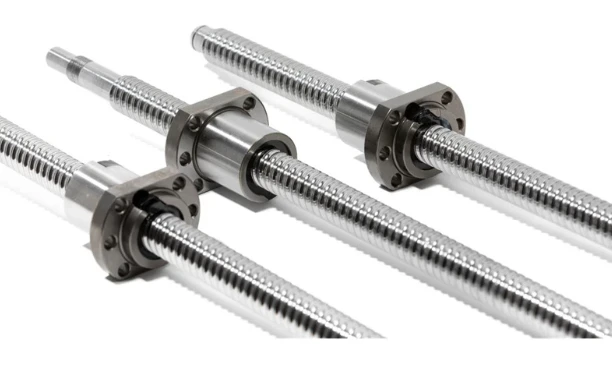
A ball screw is a precision mechanical linear actuator that converts rotary motion into linear motion with minimal friction. Unlike conventional lead screws that rely on sliding contact, ball screws use recirculating hardened steel balls rolling between a threaded shaft and a matched nut, achieving transmission efficiencies typically above 90%. They are the motion core of CNC machine tools, robotic arms, semiconductor wafer stages, and medical automation devices worldwide—applications where sub-millimeter repeatability and long service life are non-negotiable.
Advantages of Our Ball Screws
±0.005 mm Positioning Accuracy
Each shaft is finish-ground on Japanese and German CNC grinding machines and verified by CMM coordinate measuring machine before shipment. Our accuracy grades comply with German DIN standards, giving you reliable sub-5-micron repeatability across the full stroke.
Transmission Efficiency Above 90%
Recirculating ball bearings eliminate sliding friction, converting more than 90% of input torque into useful linear force. This reduces motor size requirements, lowers heat generation, and cuts energy consumption compared to lead screws.
High Load Capacity Across the Full Range
From the compact SFU1204 (12 mm diameter, 4 mm lead) handling light automation loads, to the heavy-duty SFU8020 (80 mm diameter, 20 mm lead) for large machining centers, our catalog covers dynamic load ratings from a few kN to over 100 kN.
Low Noise, Smooth Motion
Pre-loaded anti-backlash nuts and precision-ground ball grooves ensure whisper-quiet, vibration-free travel—critical for medical instruments, semiconductor stages, and precision measurement systems.
Long Service Life
Proper lubrication and our standard material spec—SAE 6150 alloy steel shaft, Induction Hardened to 58 Rc minimum; SAE 8620 steel nut, Carburized & Hardened to 58 Rc minimum; Grade 25 chrome steel balls (52100)—combine to deliver a service life rated to millions of revolutions under rated load.
OEM / Custom Configurations Accepted
Non-standard lengths, special end machining, custom leads, nickel-plated shafts, or blacking surface treatment—our engineering team handles bespoke requirements with full drawing review and sample confirmation before mass production.
Ball Screw Specifications
| Parameter | Range |
|---|---|
| Nominal Diameter | 12 mm – 80 mm |
| Lead | 4 mm – 40 mm |
| Accuracy Grade | C3 – C7 (DIN / ISO standard) |
| Shaft Material | SAE 6150 Alloy Steel |
| Shaft Heat Treatment | Induction Hardening, min. 58 Rc |
| Nut Material | SAE 8620 Aircraft-Quality Steel |
| Nut Heat Treatment | Carburized & Hardened, min. 58 Rc |
| Ball Grade | Grade 25 Chrome Steel (52100) |
| Return Tube Material | SAE 4130 Steel, Flame Hardened, 63–66 Ra |
| Surface Treatment | Nickel Plating / Blacking |
| Monthly Capacity | 100,000 sets |
| MOQ | 1 piece |
| Standard Lead Time | 7–15 days |
Types of Ball Screw
SFU Series — Single-Nut Flange Ball Screws
The most widely used ball screw type. A single flange nut mounts directly to the carriage, keeping the assembly compact. Available from Ø8 mm to Ø80 mm with leads of 4–20 mm. Best for CNC axis drives, linear actuators, and general industrial automation.
01
SFE Series — Large-Lead Ball Screws
The SFE (or "equal-lead") series uses a 1:1 lead-to-diameter ratio—e.g., SFE2020 is 20 mm diameter × 20 mm lead—for fast traverse speeds without increasing shaft RPM. Ideal for rapid-return axes, high-speed pick-and-place robots, and any application demanding fast linear velocity under light axial loads.
02
Rolled Ball Screws
Formed by cold thread-rolling rather than grinding, rolled ball screws offer excellent positional precision (several thousandths of an inch per foot) at competitive cost. Suited for general industrial automation, 3D printers, and applications where budget is a factor without sacrificing repeatability.
03
Ground Ball Screws
Produced by rough machining, case hardening, and precision cylindrical grinding on high-speed machines, ground ball screws achieve the tightest accuracy grades (C3 and above). Used in high-end CNC machining centers, aerospace positioning systems, and precision measurement equipment.
04
Miniature Ball Screws
Compact ball screws with small diameters (typically under 12 mm) for space-constrained devices—laser systems, gauge instruments, semiconductor test handlers, and medical delivery mechanisms requiring smooth, precise travel in a minimal envelope.
05
Applications of Ball Screw
CNC Machine Tools
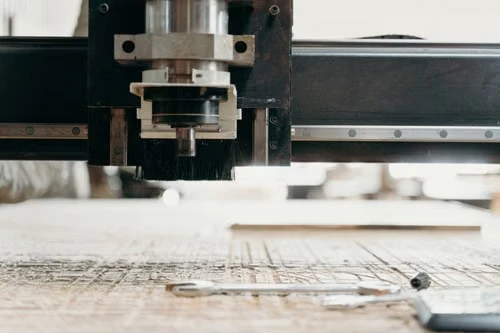
Ball screws are the standard feed-drive component in milling machines, lathes, and machining centers, providing the rigidity, accuracy, and repeatability that precision metal cutting demands.
Industrial Robots & Collaborative Arms
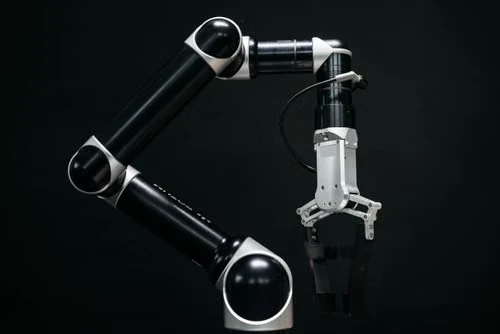
Robotic joints and linear axes depend on ball screws for repeatable pick-and-place positioning, welding path following, and assembly force control across millions of cycles.
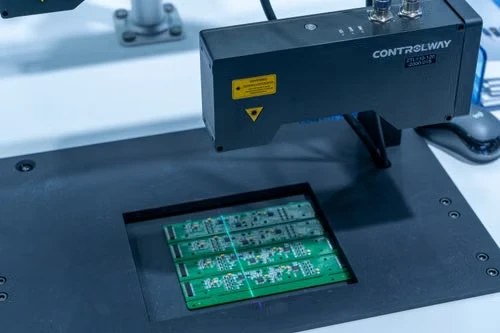
Semiconductor Manufacturing
Wafer-handling stages, lithography alignment systems, and die-bonding machines all rely on ball screws to achieve sub-micron positioning in cleanroom environments.
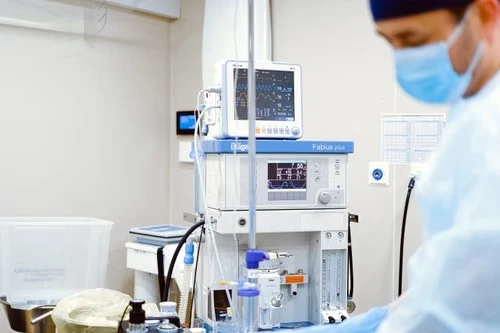
Medical Devices & Robotic Surgery
Surgical robotic systems and infusion pumps use ball screws to convert motor torque into steady, precise linear force—where the margin for error is measured in fractions of a millimeter.
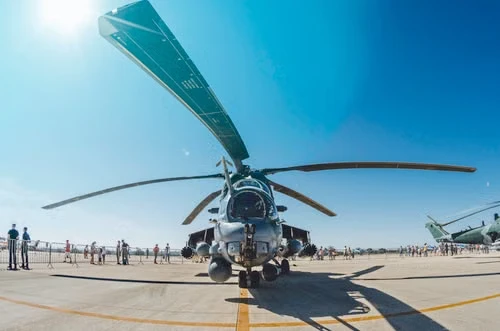
Aerospace & Defense
Aircraft control surface actuators, satellite telescope drives, and missile guidance systems require ball screws that deliver high accuracy under extreme temperature and vibration conditions.
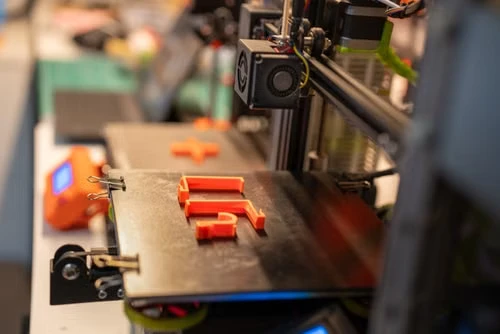
3D Printing & Additive Manufacturing
The print head or build platform in FDM and SLA printers relies on ball screws for precise layer positioning, directly affecting dimensional accuracy and surface quality of finished parts.
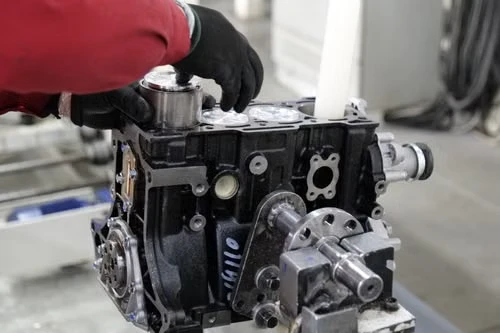
Automotive Manufacturing
Automated welding, body-panel pressing, and chassis-assembly lines use ball screws to deliver consistent positioning force across high-volume, continuous production shifts.
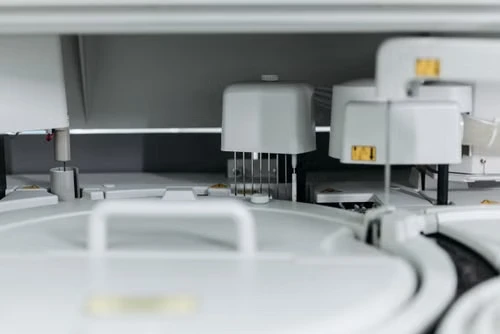
Laboratory Automation
Liquid-handling robots, spectrometer sample stages, and optical alignment fixtures demand the low backlash and smooth travel that ball screws uniquely provide.
Why Choose Baili as Your Ball Screw Supplier?
20+ Years of Linear Motion Expertise
Our core engineering team has over 20 years of hands-on experience in precision linear motion component design and manufacturing. That accumulated knowledge informs every design decision—from groove geometry to heat-treatment depth—across our SFU and SFE product lines.
14,000 m² Modern Factory in Zhejiang
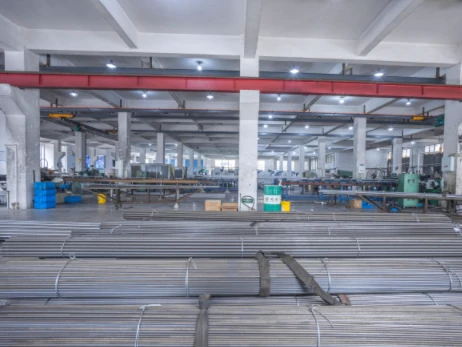
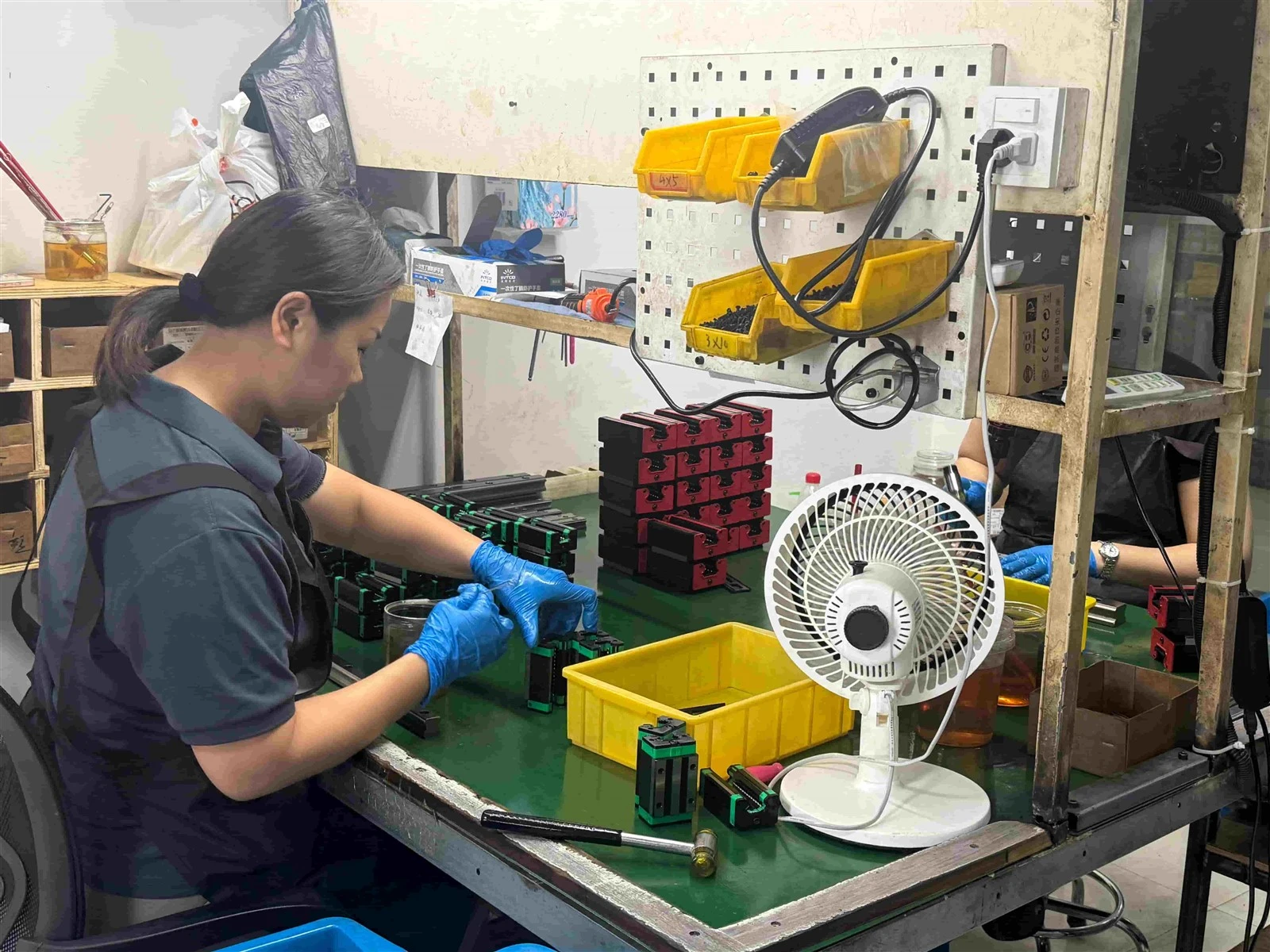
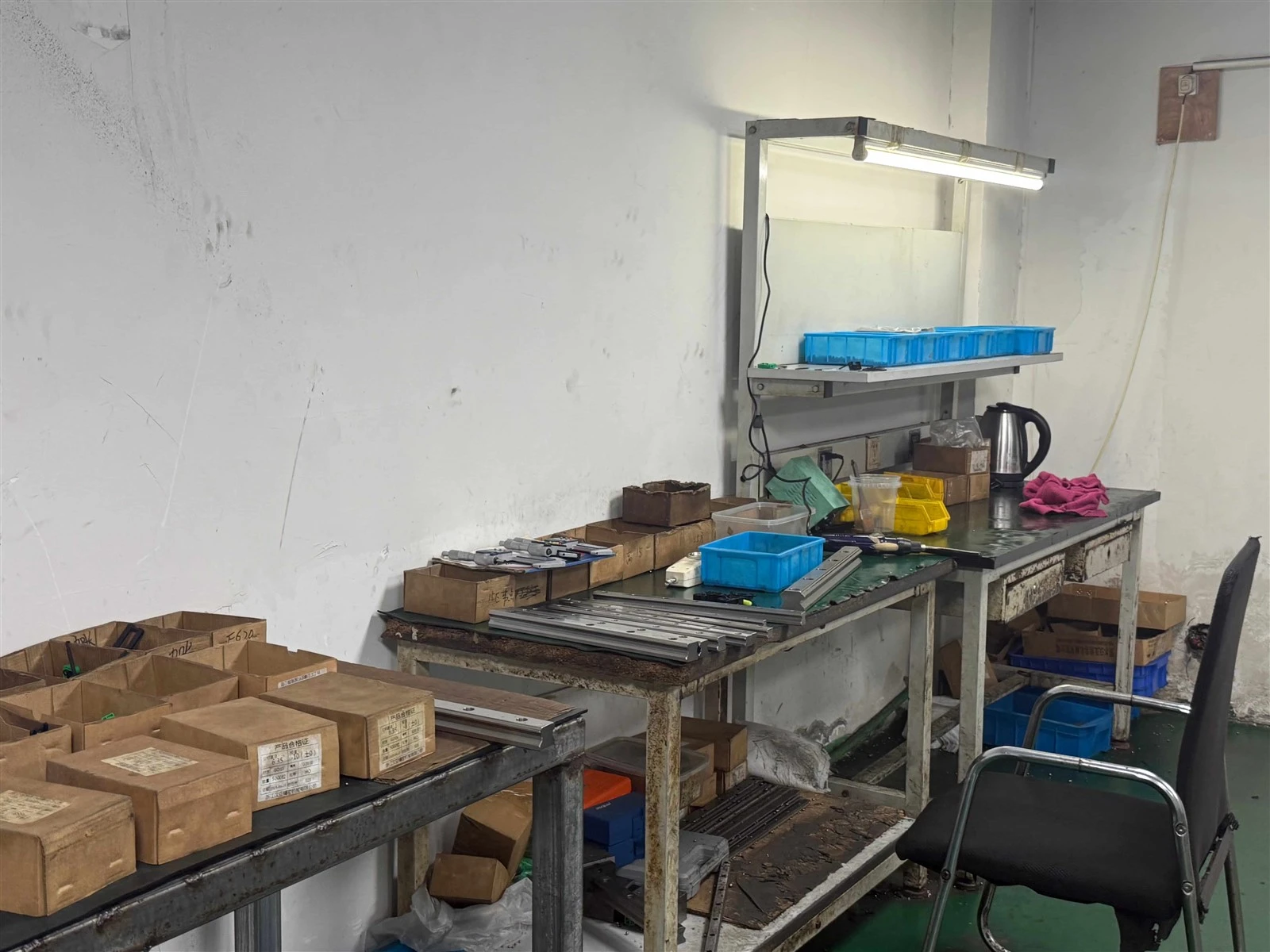
Our facility in Shuigai Industrial Park, Lishui City, Zhejiang Province spans 14,000 square meters and houses dedicated workshops for slide housing production, optical axis machining, slider assembly, inspection, and packaging. A temperature- and humidity-controlled precision machining zone ensures dimensional stability during critical grinding operations.
Japanese & German CNC Grinding Machines
We have invested in high-precision CNC cylindrical grinding equipment from Japan and Germany, enabling automated, repeatable grinding of ball screw shafts to ±0.005 mm. Every finished shaft is verified by CMM (Coordinate Measuring Machine) for full dimensional traceability.
ISO 9001 & CE Certified, 20+ National Patents
Our quality management system is ISO 9001 certified. Products can be supplied with CE certification on request. We hold approximately 20 national patents covering ball screw groove profiles, nut circulation designs, and manufacturing process innovations.
100,000 Sets / Month — Fast Delivery in 7–15 Days
A monthly production capacity of 100,000 sets and a deep inventory of standard SFU and SFE components allow us to fulfill small sample orders and large-volume contracts on equally short lead times. Standard products ship within 7–15 days from our Zhejiang warehouse, backed by the Long Yangtze Delta supply chain.
Competitive Pricing, MOQ of 1 Piece
We accept orders from single-piece samples to full container loads with no minimum order quantity, making Baili accessible for R&D engineers, OEM builders, and large-volume buyers alike. Pricing is structured on volume tiers with no hidden fees.
How to Order Custom Ball Screws
Share your diameter, lead, length, accuracy grade, end machining drawing, and target quantity via the form below or by email to stella@linearguidemanufacturer.com.
Our team reviews your drawing within 24 hours and confirms feasibility, lead time, and price.
We produce and ship a confirmed sample for your validation. You cover outbound freight; we cover rework if the sample falls outside spec.
Upon sample approval, production begins. Standard products: 7–15 days. Custom non-standard: lead time confirmed at order stage.
CMM inspection report accompanies every shipment. Express courier (DHL / FedEx / UPS) for small orders; sea or air freight for bulk orders.
Our Factory & Equipment

Baili's 14,000 m² facility in Shuigai Industrial Park, Lishui City, Zhejiang Province has been purpose-built for precision linear motion manufacturing. The site encompasses five specialized workshops: Slide Housing Production, Optical Axis Production, Slider Assembly, Slider Inspection, and Slider Packaging. A dedicated precision machining zone with temperature and humidity control ensures dimensional stability during the critical grinding stages.
Key equipment includes CNC cylindrical grinding machines sourced from Japan and Germany for ±0.005 mm thread grinding, a CMM (Coordinate Measuring Machine) for 3D full-dimensional inspection with traceable reports, and Baili's industrial smart display center for real-time factory monitoring and data-driven production management. The facility employs approximately 50 people, including 5–10% in R&D and quality control roles.
Frequently Asked Questions About Ball Screws
Q: What is a ball screw and how does it work?
A: A ball screw converts rotary motion into linear motion using recirculating hardened steel balls rolling in precision-ground helical grooves between a shaft and a nut. The rolling contact reduces friction dramatically compared to sliding lead screws, yielding efficiencies above 90%.
Q: What accuracy grades do Baili ball screws meet?
A: Our standard catalog covers accuracy grades C3 through C7 per DIN/ISO standards. Ground ball screws achieve C3 precision (±0.005 mm per 300 mm), while rolled variants cover C5–C7. Custom high-precision grades can be discussed for special applications.
Q: What is the difference between SFU and SFE ball screws?
A: SFU series ball screws have a lead smaller than the shaft diameter (e.g., SFU2005: 20 mm diameter, 5 mm lead), optimized for high axial load and precise positioning. SFE series uses a 1:1 lead-to-diameter ratio (e.g., SFE2020: 20 mm diameter, 20 mm lead), designed for maximum linear speed under lighter loads.
Q: What diameter and lead options are available?
A: We offer shaft diameters from 12 mm to 80 mm and leads from 4 mm to 40 mm across both SFU and SFE series. Custom non-standard combinations are accepted with drawing confirmation.
Q: What materials and heat treatment are used?
A: Shafts: SAE 6150 alloy steel, induction hardened to min. 58 Rc. Nuts: SAE 8620 aircraft-quality steel, carburized & hardened to min. 58 Rc. Balls: Grade 25, 52100 chrome steel. Return tubes: SAE 4130 steel, flame hardened, 63–66 Ra.
Q: What is the minimum order quantity (MOQ)?
A: MOQ is 1 piece. We support single-sample prototyping through to full container-load bulk orders with the same quality standard.
Q: How long does delivery take?
A: Standard SFU and SFE products in stock ship within 7–15 days. Custom non-standard ball screws: lead time is confirmed at order placement, typically 20–30 days depending on specifications and quantity.
Q: Do ball screws require lubrication?
A: Yes—ball screws must never run dry. We recommend grease or oil lubrication per the application's speed and load. Running without lubrication can reduce service life by 90% or more. Each unit ships with rust preventative applied; apply your specified lubricant before first operation.
Q: Are your ball screws compatible with THK or HIWIN standard dimensions?
A: Many of our SFU series products are dimensionally compatible with THK and HIWIN equivalent models. Please share your current part number and we will confirm compatibility or offer a direct replacement.
Q: What surface treatments are available?
A: Standard options are nickel plating and blacking (blackening). These improve corrosion resistance and reduce reflectivity. Custom surface treatments can be discussed based on your operating environment.
Q: Do you provide CE or ISO certification documentation?
A: Yes. We are ISO 9001 certified and can supply CE certification for EU-bound shipments. Certification documents and CMM inspection reports are provided with each order.
Q: Can you produce custom-length ball screws with special end machining?
A: Yes. Submit your shaft end-machining drawing (keyway, thread, stepped journals, etc.) and required length. Our engineering team reviews within 24 hours and provides a quotation.
Q: What payment terms do you accept?
A: ① 100% T/T (bank transfer) before shipment; ② 30% deposit by T/T + balance by L/C at sight. Payment terms for large orders are negotiable.
Q: Can I visit the factory before placing an order?
A: Absolutely. Factory visits are welcome. Please notify us in advance so we can arrange your visit to our Shuigai Industrial Park facility in Lishui, Zhejiang.
Q: What after-sales support do you offer?
A: We operate a 360° full-cycle support system: 24/7 technical hotline, 2-hour emergency response in East China, 72-hour on-site service nationwide, 24-hour spare-parts delivery in the Yangtze Delta region, free technical training (including VR simulation), and lifetime technical file management for each customer.
Find professional ball screw manufacturers and suppliers in China here! We warmly welcome you to buy discount ball screw for sale here and get pricelist from our factory. Also, customized service is available.
rolled ball screw, sfu0802, aerospace ball screws