

As a leading supplier of linear guide rails, I understand the critical importance of ensuring the quality of our products. Linear guide rails serve as the backbone of numerous industrial applications, from automated manufacturing systems to precision machinery. Any compromise in their quality can lead to significant performance issues, increased downtime, and even safety hazards. In this blog post, I will share some key strategies and practices that we implement to guarantee the high quality of our linear guide rails.
Material Selection
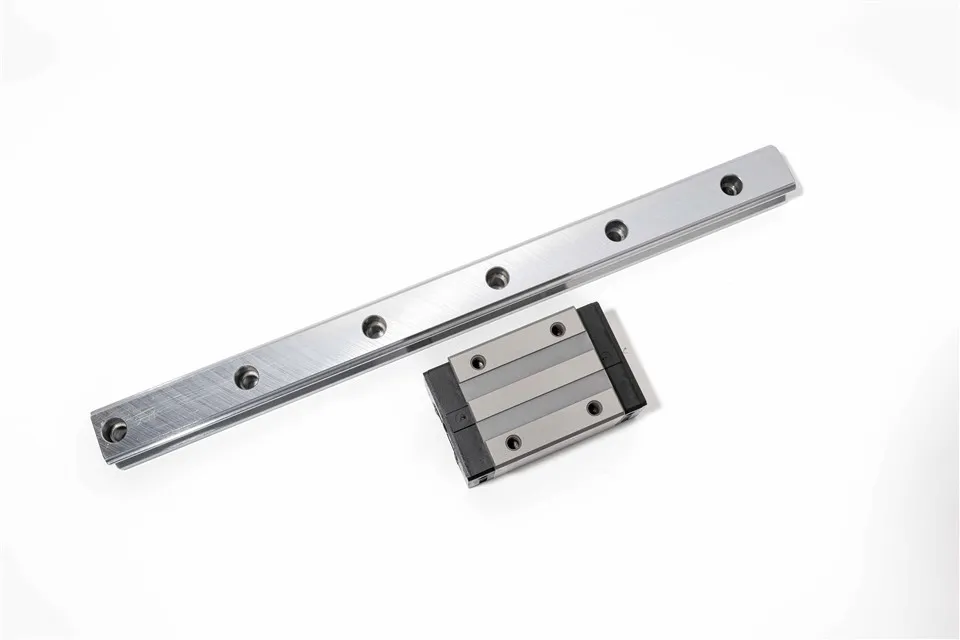
The foundation of a high-quality linear guide rail begins with the choice of materials. We employ rigorous material selection processes to ensure that only the finest materials are used in our products. For the rail and block components, we typically select high-grade alloy steels, such as chromium-molybdenum steel, which offer excellent strength, hardness, and wear resistance. These steels are carefully heat-treated to optimize their mechanical properties and enhance their durability.
In addition to the base material, the surface treatment of the linear guide rail is also crucial. We use advanced surface finishing techniques, such as induction hardening and nitriding, to create a hard and wear-resistant surface layer. This not only improves the guide rail's resistance to abrasion and corrosion but also reduces friction and energy consumption during operation.
Precision Manufacturing
Precision manufacturing is another key factor in ensuring the quality of linear guide rails. We utilize state-of-the-art manufacturing equipment and processes to achieve the tight tolerances and high surface finishes required for optimal performance. Computer numerical control (CNC) machining technology is employed to precisely shape the rail and block components, ensuring accurate dimensions and smooth surfaces.
During the manufacturing process, we implement strict quality control measures at every stage to detect and correct any potential defects. This includes in-process inspections, dimensional measurements, and surface roughness testing. By continuously monitoring and adjusting the manufacturing parameters, we can ensure that each linear guide rail meets our strict quality standards.
Quality Testing
Before our linear guide rails are shipped to customers, they undergo a comprehensive series of quality tests to verify their performance and reliability. These tests include load capacity testing, stiffness testing, and fatigue testing. Load capacity testing involves applying a known load to the guide rail and measuring its deformation and stress distribution. Stiffness testing measures the guide rail's resistance to deflection under load, while fatigue testing simulates the long-term operation of the guide rail under cyclic loading to evaluate its durability.
In addition to these mechanical tests, we also conduct non-destructive testing (NDT) procedures, such as ultrasonic testing and magnetic particle inspection, to detect any internal defects or cracks in the guide rail components. These NDT techniques allow us to identify potential issues before they become critical, ensuring the safety and reliability of our products.
Design Optimization
The design of a linear guide rail plays a significant role in its performance and quality. We invest heavily in research and development to continuously improve the design of our products. Our engineers use advanced simulation tools and techniques to optimize the geometry and structure of the guide rail, ensuring maximum load capacity, stiffness, and precision.
For example, we have developed a unique ball circulation system for our HG Series Linear Guideways, which reduces friction and noise while improving the guide rail's smoothness and accuracy. This innovative design not only enhances the performance of the guide rail but also extends its service life.

Quality Management System
To ensure consistent quality across all our products, we have implemented a comprehensive quality management system that complies with international standards, such as ISO 9001. This system encompasses all aspects of our business, from raw material procurement to product delivery. It includes detailed quality control procedures, documentation, and personnel training programs to ensure that every employee understands and follows our quality principles.
Our quality management system also includes a continuous improvement process, where we regularly review and analyze customer feedback and internal quality data to identify areas for improvement. By implementing corrective and preventive actions, we can continuously enhance the quality of our products and services.
Customer Support
At our company, we believe that providing excellent customer support is an essential part of ensuring the quality of our linear guide rails. Our experienced technical support team is available to assist customers with product selection, installation, and maintenance. We offer comprehensive training programs and installation guides to help customers ensure that our linear guide rails are installed and used correctly.
In addition, we maintain a large inventory of spare parts to ensure quick and easy replacement in case of any issues. Our prompt and reliable customer support services help to minimize downtime and ensure the smooth operation of our customers' equipment.
Industry Experience and Expertise
With years of experience in the linear guide rail industry, we have developed a deep understanding of the market and our customers' needs. Our team of experts has extensive knowledge of linear motion technology and can provide customized solutions to meet the specific requirements of our customers. Whether it's a standard application or a highly specialized project, we have the expertise and resources to deliver high-quality linear guide rails that meet or exceed our customers' expectations.
For example, we recently developed a custom linear guide rail solution for a customer in the aerospace industry. The project required a guide rail with extremely high precision and reliability to meet the demanding requirements of their aircraft manufacturing process. Our team worked closely with the customer to understand their needs and developed a unique design that incorporated advanced materials and manufacturing techniques. The end result was a high-quality linear guide rail that met the customer's strict specifications and delivered excellent performance in their application.
Conclusion
Ensuring the quality of linear guide rails is a complex and multi-faceted process that requires a commitment to excellence at every stage, from material selection and precision manufacturing to quality testing and customer support. At our company, we are dedicated to providing our customers with the highest quality linear guide rails that meet the most demanding industrial applications.
If you are in the market for high-quality linear guide rails, we invite you to explore our product range, including the Eg15 Linear Bearing, Linear Rail 3000mm, Sbr 20 Linear Rail, and SCS Guide Rail. Our team of experts is ready to assist you with your specific requirements and provide you with the best solutions for your applications. Feel free to contact us to discuss your purchasing needs and start a productive partnership.
References
- Callister, W. D., & Rethwisch, D. G. (2013). Materials Science and Engineering: An Introduction. Wiley.
- ISO 9001:2015 Quality management systems - Requirements. International Organization for Standardization.