

When working with industrial automation, robotics, or custom machinery in extreme settings, engineers often question whether standard components can withstand freezing conditions. Applications such as cold-storage warehouses, arctic outdoor setups, and aerospace testing chambers expose mechanical parts to temperatures far below standard operational thresholds. As a specialized manufacturer, we frequently receive inquiries from clients whose standard positioning components seize, stutter, or experience drastic efficiency drops when the mercury plummets. Choosing the correct positioning technology requires understanding material selection, thermal contraction physics, and specialized lubrication chemistry rather than relying on off-the-shelf components.
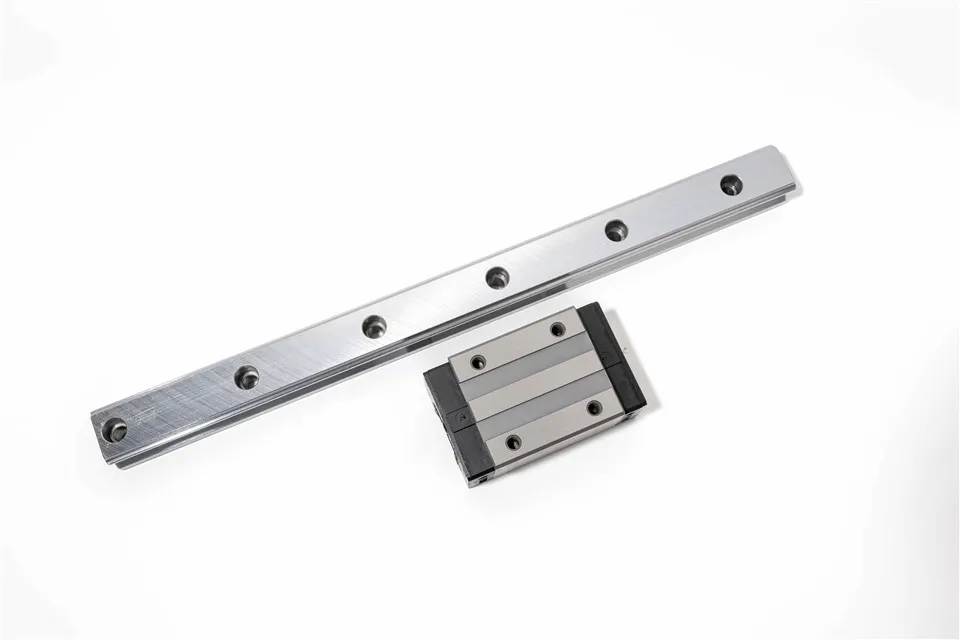
Standard linear guide rails are typically engineered for room-temperature environments, meaning their baseline manufacturing tolerances, sealing components, and factory-applied greases are optimized for moderate conditions. When ambient temperatures drop significantly, two primary physical challenges emerge: metal contraction and lubricant thickening. Metals contract under extreme cold, reducing the operational clearance between the guide rail and the sliding carriage. If the clearance shrinks beyond optimal thresholds, mechanical friction spikes, causing the system to bind or stall entirely. Simultaneously, standard petroleum-based greases thicken dramatically in sub-zero environments, transforming from a lubricating fluid into a viscous, syrup-like barrier that prevents smooth rolling element circulation.
Overcoming these physical limitations requires replacing generic components with engineered low-temperature solutions. For instance, deploying our HG Series Linear Guideways provides a reliable foundation for heavy-duty industrial freezing applications. These guideways are manufactured using proprietary alloy steels subjected to specialized heat-treatment processes. This metallurgical optimization minimizes thermal contraction variations between the rail and the matching bearing block, preserving consistent internal clearance even in sub-zero environments. Documented field deployments in northern Canadian mineral extraction facilities demonstrate that replacing conventional components with properly specified HGR Linear Rail options eliminates cold-induced seizures and maintains continuous operational continuity over extended deployment cycles.
Material composition serves as the primary determinant for low-temperature durability. While standard carbon steel offers cost-effective strength for indoor factory automation, its contraction rate presents challenges in fluctuating environments. Higher-grade stainless steel variants offer superior corrosion resistance and stable low-temperature performance, though careful alloy selection is required to prevent material brittleness. For compact automation tasks, laboratory instruments, or desktop-scale positioning systems, integrating a 1200mm Linear Rail manufactured with specialized low-temperature stainless variants ensures reliable movement down to minus forty degrees Celsius without mechanical degradation. For extended conveyor networks and material handling lines operating inside industrial food freezing facilities, the SBR20 1500mm model provides an ideal balance of structural rigidity and wider internal tolerances to absorb thermal movement.
Lubrication chemistry remains equally critical for successful low-temperature linear motion. Standard industrial greases rely on additive packages that phase-separate or solidify below minus ten degrees Celsius. High-performance low-temperature linear rails utilize synthetic, ester-based lubricants formulated to maintain stable viscosity and shear resistance down to minus fifty degrees Celsius. This eliminates the necessity for frequent maintenance interventions or manual re-greasing in hard-to-reach locations such as remote wind turbines, outdoor solar tracking arrays, or automated high-bay cold storage facilities. The HGR20 Linear Guide Rail comes pre-lubricated with advanced synthetic grease, ensuring immediate deployment and consistent low-friction performance across severe temperature swings.
Thermal Cycling and Environmental Stress Factors
Industrial equipment deployed in regions with extreme seasonal fluctuations, such as the American Midwest or northern European territories, experiences continuous thermal cycling. Daily and seasonal temperature swings cause metal components to repeatedly expand and contract, introducing cumulative fatigue stress into mounting surfaces and rail structures. Standard commercial rails frequently develop micro-fractures or alignment warping under such conditions, leading to catastrophic premature failure. Premium industrial guide rails are engineered with stress-relieved metallurgy designed to absorb thermal expansion cycles without sacrificing straightness or running parallelism.
Installation Best Practices for Sub-Zero Motion Systems
Even the highest-grade linear motion components will fail prematurely if installation protocols do not account for thermal physics. When mounting linear guide rails in environments subject to extreme cold or wide temperature fluctuations, technicians must incorporate thermal expansion allowances. Leaving micro-gaps of approximately 0.5 millimeters per meter of rail length at structural joints accommodates natural metal movement during warm-up phases, preventing compressive binding. Furthermore, torque specifications for mounting bolts must be verified using calibrated tools to ensure the rail base remains perfectly flat against the machine bed without inducing twisting forces across the raceways.
Selecting the appropriate linear motion technology for low-temperature environments protects production continuity and prevents costly operational downtime. Engineers facing sub-zero design challenges can leverage our complete portfolio of specialized components, including the SBR20 1500mm for automated conveyor integration, the robust HGR Linear Rail for heavy industrial loads, the versatile 1200mm Linear Rail for precision instruments, and the comprehensive HG Series Linear Guideways for demanding multi-axis machinery. Proper component selection combined with correct installation practices ensures seamless mechanical performance regardless of external weather conditions.

Let me also talk about installation quick tips, because even the best rail can fail if you mount it wrong. When installing a linear guide rail in cold environments, you need to account for thermal expansion/contraction-leave a tiny gap at the ends, like 0.5mm per meter of rail length, so it can expand when it warms up without binding. We include that in all our product manuals, but I see so many people skip it, which leads to issues. For example, if you're mounting a 1200mm Linear Rail (link here), that's a 0.6mm gap at the end to account for contraction in the cold-easy enough, just don't bolt it all the way tight at both ends.
Now, if you're still on the fence, let's talk about why this matters. If your machinery seizes up in the middle of a production run in a cold warehouse, that's downtime, lost money, maybe even damaged parts. We've had clients tell us that when their old rail seized, it cost them $10k in lost production in a single day. Swapping to a cold-rated linear guide rail is a one-time cost that saves you way more in the long run. All our cold-rated rails come with a 1-year warranty too, so you don't have to stress about it failing.
At the end of the day, the answer to "Can a linear guide rail be used in low-temperature environments?" is a resounding yes-you just need to pick the right one. Don't waste money on cheap rails that aren't engineered for cold, and don't assume any rail will work. If you're working in a cold space, whether that's a freezer, arctic field, or outdoor industrial setup, we've got the rails that work. We've got the SBR20 1500mm for conveyor systems, HGR Linear Rail for high-load apps, 1200mm Linear Rail for small projects, HGR20 Linear Guide Rail for precision work, and the whole HG Series Linear Guideways for whatever cold job you've got. If you need help figuring out exactly what you need, just reach out-we don't do pushy sales stuff, we just help you pick the right rail for your environment. No question is too small, and we'll even walk you through installation if you need it. So if you're tired of your rails seizing up when the temperature drops, hit us up-let's get your machinery running smooth, even when it's freezing outside.
References
- Linear Motion Guidelines and Bearings: Temperature Performance Considerations, Motion System Design, 2022
- ASTM Standard F2089-19, Standard Practice for Temperature Testing of Linear Motion Systems, ASTM International, 2019
- Cold-Resistant Lubricants for Industrial Automation, Industrial Lubrication and Tribology, Volume 74, Issue 3, 2022