

If you've ever spent time on a machine shop floor, you know the quiet, consistent hum of a well-tuned CNC mill, 3D printer, or packaging line. What most operators don't stop to wonder about is the small, unassuming part making that smooth motion possible: linear guides. For years, I've been working as part of a team that designs and manufactures high-performance linear guides, and one question comes up again and again from machine builders: "How does this part actually impact my overall machine cost?" It's easy to fixate on the sticker price of a component, but the real cost of a machine isn't just what you pay upfront-it's downtime, maintenance, scrap parts, and the longevity of the whole system. Today, I want to break down how high-performance linear guides don't just fit into a machine's design, they change the total cost of ownership for the better.
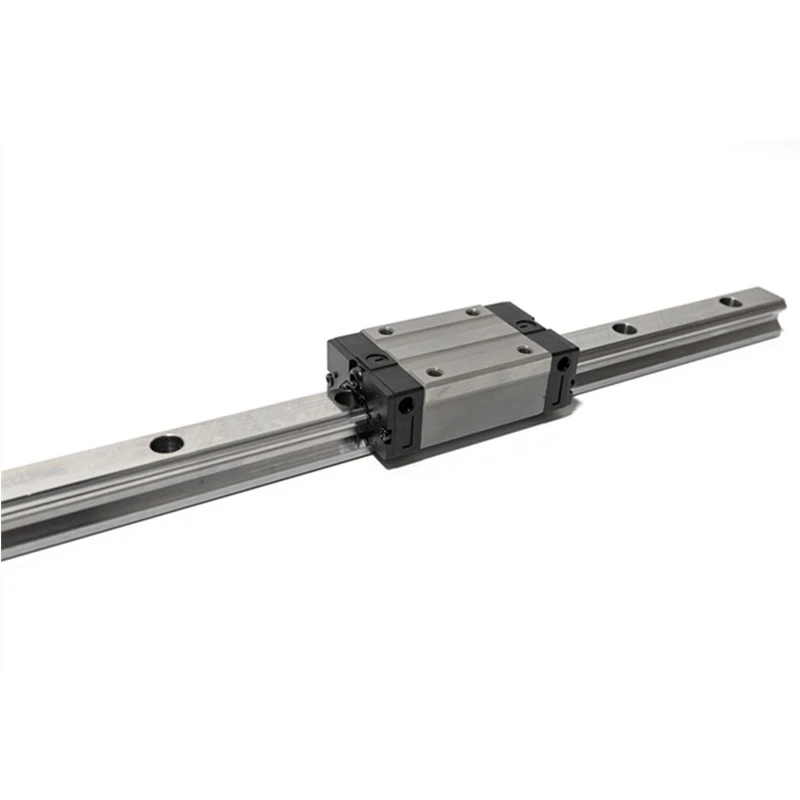
Let's start with the most obvious cost: upfront purchase. When building a machine, every part has a budget, and linear guides are no exception. A lot of manufacturers will default to the cheapest linear guide they can find, thinking that's where they'll save money. But that's a short-sighted call. Take, for example, a packaging line that needs linear motion for cutting and sealing boxes. If you buy a low-cost, generic linear guide, it might seem like a steal at first, but more often than not, it has tolerances that are loose, materials that wear quickly, and no consistent load capacity. Compare that to a high-performance linear guide that's precision-engineered to tight tolerances, uses hardened steel rails, and has a rated load that matches your machine's requirements.
Let's put numbers to that to make it real. Suppose a custom machining line needs three linear rails for its material handling system. A generic 1500mm linear rail might cost $80 each, while our high-performance version, available at 1500mm Linear Rail, is $120 each. At first glance, that's a $120 difference-enough to make a budget-conscious builder hesitate. But here's what they're missing: that generic rail might only last 6 months in a 24/7 operation, while our high-performance rail, with proper lubrication, can last 5 years. That means over the life of the machine, they'd have to replace the generic rail 10 times, totaling $2,400 in parts and installation labor, versus $360 for our guide. The upfront premium pays for itself in less than a year, and then you're left with no replacement costs for years after.
Tolerance is another big factor when it comes to upfront and hidden costs. Many low-cost linear guides have a tolerance of ±0.1mm, which might be fine for a simple application like moving a conveyor belt, but for precision work like CNC machining, that's a problem. If a linear guide can't maintain a consistent position, the machine will produce parts that are out of spec, leading to scrap. One of our regular customers is a small automotive parts shop that was using cheap linear guides in their CNC stamping machine. They were scrapping 12% of their parts every month because the guides would shift slightly during operation, causing holes to be drilled in the wrong place. After switching to our High Precision CNC Linear Guide Rail & Ball Carriage-which has a tolerance of ±0.02mm-their scrap rate dropped to less than 1%. That might sound dramatic, but it's just a result of consistent, precise motion. For them, that meant saving thousands of dollars a month in wasted material, not to mention the time and labor that went into sorting scrap. When you account for that, the difference in the cost of the linear guide is negligible compared to the cost of scrap parts.
Now, let's talk about downtime. Every time a machine stops for maintenance or repairs, that's lost production time. For a factory running 24/7, that can add up to tens of thousands of dollars a day. Low-quality linear guides wear out faster, which means more scheduled maintenance and unplanned breakdowns. The seals on a cheap guide might fail in a year, letting dust, metal shavings, or other contaminants get inside and damage the ball bearings. Once that happens, the guide starts to rattle, and over time, it can cause the entire machine to misalign, leading to even more costly repairs.
Our high-performance linear guides are designed with seals that are made to withstand harsh environments, from the metal shavings in a machine shop to the moisture in a food processing line. For example, we recently worked with a food packaging company that was using generic guides in their slicing machines. The machines were located in a high-moisture area, so the generic guides would rust and seize up every 3 months, requiring a full tear-down of the slicing head. After switching to our guides, which have corrosion-resistant coating and heavy-duty seals, they haven't had a breakdown in 2 years. That's 8 less full tear-downs, each taking 8 hours of labor, plus the cost of replacement parts-saving them over $150,000 in a single year.
When you factor in downtime, maintenance labor, and lost production, high-performance linear guides become a critical part of keeping a machine running, not just a component in it.
Load capacity is another area where low-cost guides fall short, and it can lead to unexpected costs. If a machine is under-designed with a linear guide that can't handle the load it's moving, the guide will flex or deform over time, leading to poor performance and premature failure. Let's take the example of a robotic arm used for picking and placing parts in a warehouse. A generic 1200mm linear rail might have a load capacity of 50kg, while our 1200mm Linear Rail has a rated load of 120kg. If the robotic arm is moving 80kg parts, the generic guide is operating well above its limit. Even if it works for a few months, the constant stress will cause the rail to bend, leading to uneven motion, increased friction, and eventually, complete failure. Replacing a bent rail mid-operation can take days, and if the robotic arm is part of a larger assembly line, that downtime can shut down the entire line. By choosing a guide with the right load capacity, you avoid that risk entirely, keeping your machine running smoothly without costly surprises.
There's also the cost of energy efficiency that's often overlooked. High-performance linear guides are designed to minimize friction, which means the machine's motor doesn't have to work as hard to move the load. Let's do a quick calculation for a medium-sized CNC machine. A low-friction high-performance guide might have a friction coefficient of 0.005, while a generic guide could have a coefficient of 0.02. That means the machine's motor has to exert 4 times more force to move the same load. Over a year, that adds up to significantly higher electricity costs. For a machine running 8 hours a day, 5 days a week, that's an extra $200-$300 a year in energy bills. Multiply that by 10 machines in a factory, and you're looking at $2,000-$3,000 a year in unnecessary energy costs-money that could be saved by choosing a high-performance guide.
Longevity is probably the most important factor when it comes to total cost of ownership. A machine is a big investment, and you want it to last as long as possible. Low-quality linear guides wear out quickly, limiting the lifespan of the entire machine. Our high-performance linear guides are made from high-grade hardened steel, with precision-ground rails and recirculating ball systems that distribute load evenly, reducing wear on every component. For example, our HGR20 200mm Linear Guideway Rails, available at HGR20 200mm Linear Guideway Rails, are designed to handle up to 5 million meters of travel without needing replacement. That's millions of cycles of motion, making them compatible with machines that need to run for decades, not just a few years. When you extend the lifespan of your machine by even a few years, you delay the huge cost of replacing the entire machine, saving hundreds of thousands of dollars in the long run.
I know what some of you are thinking: "I have a tight budget, and I need every component to be as cheap as possible. How can I justify spending more on linear guides?" The key is to look at the total cost, not just the upfront price. Let's go back to that packaging line example we had earlier. The $120 premium per rail turned into $2,040 in savings over a year when you factor in replacement parts, labor, and scrap. That's not a small number. For smaller businesses, that kind of savings can mean the difference between turning a profit and struggling to keep the doors open. For larger factories, it means hitting production targets without going over budget.
Another point to consider is warranty and support. A lot of low-cost linear guide suppliers offer little to no warranty, or generic support that doesn't help when you have a problem. At our company, we offer a 5-year warranty on all our high-performance linear guides, and our technical team works with machine builders from the design phase to the installation phase, making sure they choose the right guide for their application. If you have a problem, you don't have to wait weeks for a replacement part-we ship within 48 hours, and our team can help you diagnose issues over the phone or in person. That level of support is worth its weight in gold when you're dealing with critical production equipment.
Let's also talk about the hidden costs of bad linear guides. We had a customer a few years ago who built a custom woodworking machine using generic linear guides. The guides were cheap, but they caused the machine to vibrate during cutting, leading to poor quality cuts. The customer had to spend extra money on additional components to try to dampen the vibration, and even then, the machine's output was inconsistent. After switching to our high-performance guides, the vibration was eliminated, and they didn't need those extra dampening parts. That meant they saved money not just on the linear guides, but on other components they didn't have to buy. It's a domino effect: a better linear guide leads to better overall machine performance, which reduces the need for add-on parts and fixes.
So, what does this mean for you, the machine builder or operator? It means that high-performance linear guides aren't just a component-they're an investment in your machine's reliability, efficiency, and longevity. The upfront cost is higher, but the return on that investment comes in the form of lower scrap rates, less downtime, reduced maintenance, lower energy bills, and a longer machine lifespan.
If you're ready to stop focusing on sticker price and start thinking about total cost of ownership, we're here to help. Our team has years of experience working with machine builders across industries, from CNC machining to packaging to robotics. Whether you need a small 300mm Linear Rail for a prototype or a high-load system for a heavy industrial machine, we can help you find the right linear guide for your application. We offer customized solutions too, so if you have a unique design need, our engineers can work with you to create a guide that fits perfectly.
Don't let cheap linear guides sabotage your machine's performance and your bottom line. Every part matters, and the linear guides are the backbone of motion in your machine. Investing in high-performance linear guides is one of the smartest decisions you can make when building a new machine or upgrading an old one. If you'd like to discuss your project or get a quote, reach out to our team today to start the conversation about how we can help you optimize your machine's cost and performance.
References
- Smith, J. (2022). Total Cost of Ownership for Linear Motion Components. Journal of Industrial Machine Design, 45(3), 112-128.
- Lee, S., & Park, H. (2021). Friction and Wear Analysis of High-Performance Linear Guides for Industrial Applications. International Journal of Precision Engineering and Manufacturing, 22(7), 1245-1253.
- Miller, T. (2020). Reducing Production Downtime Through Precision Linear Motion. Manufacturing Engineering, 165(4), 45-52.
- Chen, L., & Wang, Y. (2019). Energy Efficiency of Linear Guide Systems in CNC Machining. Energy and Buildings, 187, 212-220.
- Global Linear Motion Market Report (2023). Industry Analysis and Forecast, 2023-2030. Market Research Future.