

When integrating precision motion components into advanced industrial automation equipment, CNC machinery, or specialized robotics, structural accuracy and mechanical alignment are paramount. Even the highest-quality components will fail to perform to specifications if improper tools or incorrect assembly techniques are utilized during setup. Ensuring optimal operational lifespan and micron-level repeatability begins with mastering the correct deployment of specialized hardware tools. This comprehensive guide outlines the essential tooling, pre-installation preparation protocols, systematic assembly sequences, and post-installation maintenance practices required for precision motion hardware.

Essential Engineering Tooling For Precision Component Setup
Proper mechanical installation requires more than standard workshop hand tools; it demands precision instruments designed to measure micro-deviations and apply controlled mechanical force. Engineering teams must assemble a specialized toolkit before initiating any alignment or mounting procedures.
- Calibrated Torque Wrench: A high-precision torque wrench is indispensable. Fasteners secured to precision tracks must adhere strictly to manufacturer torque specifications. Excessive torque can distort the steel rail profile or strip mounting threads, while insufficient torque allows micro-vibrations to loosen fasteners, compromising alignment.
- Precision Metrology Instruments: Digital calipers, micrometers, and dial indicators are mandatory for verifying base flatness, parallelism between dual tracks, and dimensional tolerances across extended travel paths.
- Optical Or Electronic Leveling Systems: Ensuring absolute horizontal or vertical orientation prevents uneven load distribution across rolling elements, which is critical for reducing localized wear and friction coefficients.
Rigorous Pre-Installation Preparation Protocols
The foundation of a successful mechanical installation is established long before any fasteners are tightened. Skipping preliminary cleaning or inspection steps can introduce contaminants that permanently damage precision raceways.
- Surface Decontamination: The mounting surface must be meticulously cleaned using approved industrial solvents and lint-free cloths. Burrs, paint overspray, machining chips, or residual oils can prevent the guide base from seating flush against the reference shoulder, leading to immediate geometric distortion.
- Component Inspection: Technicians must inspect rails and carriages for transit damage, micro-fractures, or oxidation. Verifying that the reference edges and mounting datum surfaces are immaculate ensures smooth mechanical interaction.
- Tool Verification: Ensure all measuring equipment and torque tools are calibrated and ready within the immediate workspace to minimize assembly delays.
Systematic Step-By-Step Installation Methodology
Executing the physical mounting process requires a disciplined, methodical sequence to prevent internal binding or pre-loading errors.
- Reference Alignment And Positioning: Carefully place the primary guide against the reference shoulder of the mounting bed. Use precision clamps to hold the track in position without applying excessive deformation force.
- Initial Fastener Insertion: Insert mounting bolts loosely through the pre-drilled clearance holes, engaging the threads without applying final torque. This allows minor micro-adjustments during the alignment phase.
- Parallelism Verification: Utilizing dial indicators mounted to a reference bridge, measure the running parallelism along the length of the track. If configuring parallel rails, ensure the secondary track mirrors the primary datum precisely to prevent binding during carriage traversal.
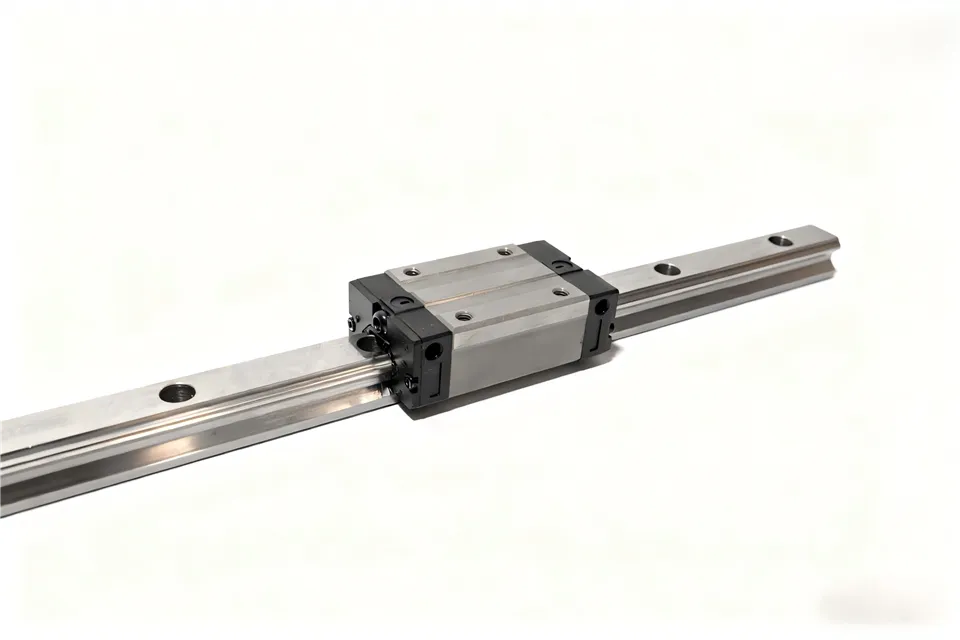
- Controlled Torque Application: Tighten mounting bolts progressively using a standardized multi-pass sequence. Begin from the center of the rail and work outward toward both ends in a criss-cross pattern. This graduated tightening prevents localized bowing and ensures uniform clamping force across the entire span. For heavy-duty industrial configurations, utilizing standardized hardware such as a high-performance linear guide ensures predictable load dispersion and structural rigidity.
Post-Installation Verification And Maintenance Protocols
Once mechanical assembly is complete, validating operational readiness and establishing routine upkeep schedules will protect the mechanical investment.
- Functional Motion Check: Manually cycle the carriage along the full travel stroke. The movement should feel completely fluid, uniform, and free of binding, scraping noises, or localized resistance spikes.
- Targeted Lubrication: Apply clean, manufacturer-recommended lubricating grease or oil directly to the raceways and internal block channels. Proper lubrication establishes a protective elastohydrodynamic film that separates rolling elements from direct metal-to-metal contact.
- Periodic Maintenance Audits: Schedule routine inspections to check fastener torque retention, monitor seal integrity, and replenish lubricant levels based on operating cycle frequency and environmental exposure.
Conclusion And Engineering Support
Precision linear motion systems represent a critical investment in the productivity and accuracy of modern machinery. Utilizing correct installation tools, adhering to strict metrological tolerances, and following systematic assembly procedures guarantees maximum operational efficiency and structural longevity. For engineering teams seeking specialized advice, custom dimensional configurations, or robust motion hardware solutions for complex industrial applications, consulting directly with experienced manufacturing specialists ensures optimal system design and seamless deployment.